
Legend of Khatu Shyam
- harish segon

- Jan 9
- 8 min read
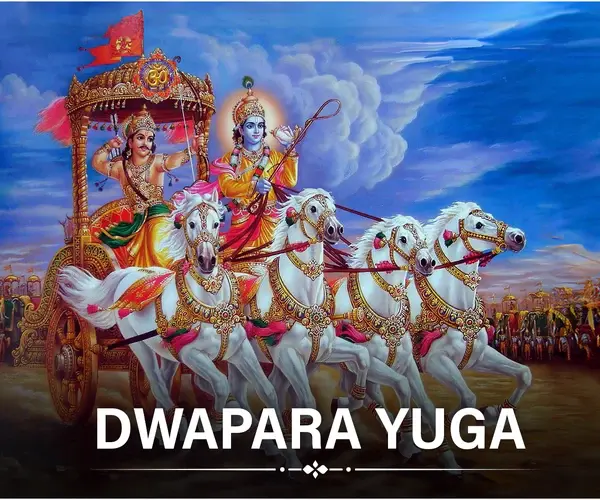
It was the age of Dwapar Yuga, the era of Lord Krishna. High atop a sacred hill, in a small ashram bathed in golden twilight, a divine moment was about to unfold.
Maurvi—the princess of the Ki Ratna tribe, fierce and tender in equal measure—lay on a bed of soft kusa grass. Her breaths grew heavy, her hands clutching the wooden beams above her. Beside her stood Ghatotkacha, son of Bhima and the mighty rakshashi Hidimba. His enormous frame, feared by warriors, now trembled like a leaf.
“Steady, my love,” she whispered. “The child who comes… is no ordinary child.”
Even before her words faded, a flash of blue light filled the room. A sound like a hundred conches echoed through the air. The child was born, his skin glowing. His eyes opened wide, reflecting the wisdom of ages far older than his tiny body.
The sages gathered around gasped.
“This child carries the blessings of the three worlds.”
Ghatotkacha knelt, tears spilling down his face.
“My son,” he murmured, “you shall be named Barbarika.”
Gods looked down from the heavens, marking the birth of a destiny that would one day alter the course of the greatest war ever fought.
By the time he was five, he could lift boulders that even seasoned warriors strained to move. By seven, he could track a deer across an entire valley without losing its scent. By nine, he could read the wind like scripture.

Unlike other warriors of his lineage, Barbarika was gentle. He picked up injured birds and nursed them. He sat by riversides, speaking softly to the fish. He listened to the stories of the elderly and wept when they spoke of suffering.
One evening, Barbarika sat alone, troubled. When his mother asked him, “What worries you, my child?” “Mother,” he said, “why must the strong take what they want from the poor?”
Maurvi ran her hand through his hair.
“Because the world is unbalanced, my son. But perhaps… someone like you may change that balance one day.”
Barbarika was practising archery when, all of a sudden, before him stood a towering figure with ash smeared on his body and a crescent moon on his head. Barbarika dropped his bow and folded his hands.
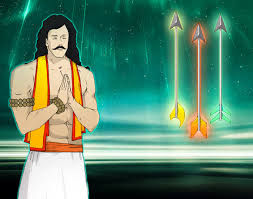
Shiva touched his forehead, and in that instant, knowledge surged through Barbarika’s mind—warrior techniques, cosmic truths, and secrets of archery known only to gods. Other divine teachers like Agni, Varuna, and celestial sages like Narmada blessed Barbarika, shaping him into an archer destined to surpass even Arjuna.

But the greatest gift came from Shiva himself: the three arrows, enough to win any war. He advised the child to use them with wisdom. Shiva cautioned that power without restraint could cause cosmic ruin.
Years passed. Barbarika became a youth—tall, radiant, unmatched in skill, and unmatched in compassion. Then the Mahabharata war began, with the Pandavas and Kauravas pitched against each other. Barbarika’s heart throbbed. He knew the Pandavas were his kin. He knew injustice had been done to them. Yet he also knew the Kauravas were many, powerful, and certain to crush the weaker side.
That night, he stood on the hill overlooking his homeland and vowed,
“If I must fight, I shall fight for the weaker side.”
A vow that would shake the very foundation of destiny.
At dawn, Barbarika mounted his blue stallion, with three divine arrows hung across his back. Maurvi stood at the gate of their home, eyes full of fear and pride. “Mother,” Barbarika said softly, “why do you weep?”
She pulled him close.
“Not from fear, but from the knowledge that destiny walks beside you.”
Without another word, Barbarika rode into the horizon.
The sun had barely risen, but already a strange destiny awaited him—in the form of a mysterious Brahmin standing alone along the roadside. A Brahmin whose eyes seemed too deep, too knowing. A Brahmin who was not a Brahmin at all.
Barbarika dismounted respectfully.“Pranaam, revered sir. Do you seek help?”
The Brahmin smiled—a slow, knowing smile that curled like a secret.“My blessings, young warrior. I see destiny rides with you.”
Barbarika bowed.“I ride to Kurukshetra, to join the war of dharma.”

The Brahmin tapped his staff lightly on the ground.“And which side do you intend to join?”
“I have vowed,” Barbarika replied, “to fight for the side that is weaker.”
The Brahmin raised an eyebrow, amused and troubled all at once.“A noble vow, but a dangerous one. Tell me, what power do you carry to the battlefield?”
Barbarika unslung the three divine arrows and said,
“These were blessed by Lord Shiva himself.”
“And how effective are they?” the Brahmin asked.
Barbarika smiled.“Revered sir, with one arrow, I can mark all my enemies. With the second, I can destroy them. With the third, I can undo all destruction. No matter how vast the army, I can end the war in a moment.”
He continued, “If I choose the weaker side and fight, the balance of war will shift. Then my vow forces me to switch again. I alone could decide the outcome of the war.”
“Young warrior,” the Brahmin said, “may I ask a final question? If both armies stood ready before you, which one would you call weaker?”
Barbarika looked genuinely confused.“That depends on their strength at that moment.”
The Brahmin’s eyes narrowed.“And with your entry, would not the side you join immediately become stronger? For who can oppose a warrior who ends battles with three arrows?”
Then the Brahmin said,“Young Barbarika, you carry a power that could unbalance the entire universe. A war meant to establish dharma cannot be won by shortcuts forged through invincible weapons.”
Barbarika stepped back, suddenly uneasy.“Tell me, sir—who are you to speak of the universe’s balance?”
The Brahmin smiled, and before Barbarika stood Lord Krishna—the Lord of the cosmos, the very soul of Dharma.
Barbarika fell to his knees, trembling. Krishna placed his gentle hand on his head.“Rise, my child. Tell me, Barbarika—if you join the war, which side will win?”
Barbarika hesitated, then spoke honestly.“Govind, wherever I stand, the other side becomes weaker. But if I keep switching sides, no side will win. The war will become eternal.”
Krishna nodded.“And so,” he said gently, “for dharma to win, for righteousness to prevail, you cannot fight.”
Barbarika bowed his head.“Tell me, Lord, what should I do?”
With infinite sorrow and compassion in his eyes, Krishna said,“To preserve Dharma, you must offer me your head.”
Barbarika did not flinch.“If my head is what you ask for, it is yours. I have only one request—let my eyes witness the war. Let me watch the play of destiny unfold.”
Krishna placed his hand on Barbarika’s brow.“Your wish shall be granted.”
The Sudarshan Chakra rose silently into the air. Barbarika closed his eyes and uttered,“Jai Shri Krishna.”
A strange radiance filled the forest as the Sudarshan Chakra completed its arc. When the light faded, Krishna gently caught the severed head of the young warrior.
Barbarika’s eyes were open—calm, serene, untouched by fear.
Krishna placed Barbarika’s head upon a clean stone altar.“You shall watch everything,”
Krishna promised.
From his sacred hill, Barbarika witnessed the greatest war of its time for eighteen days. At the end, the Pandavas won—a victory of Dharma over Adharma.
When silence finally fell over Kurukshetra, Krishna returned to the hill.
“Barbarika,” he said softly, “you have witnessed it all. Tell me—who won this war?”
The young warrior’s head glowed with divine understanding.“Govind, from where I watched, I only saw you—moving through every warrior, guiding every action. The war was yours,
Krishna. The victory was yours.”
Krishna bowed to the boy who surrendered everything and yet understood everything.
“Your devotion has no equal,” Krishna declared.“I bless you. In the ages to come, people shall call you Shyam, the dark-complexioned one, beloved of the humble. You shall be the refuge of the defeated—Haare Ka Sahara.
Those who have nothing left will find everything in you. And one day, your head shall rise again—not on a battlefield, but in a village called Khatu.”
Barbarika’s head rested peacefully on the hill, and his eyes, which had witnessed the rise and fall of heroes, slowly closed—not in death, but in divine sleep. A sleep destined to last centuries.
On Krishna’s orders, Barbarika’s head was carried to the remote village of Khatu in Rajasthan, where it was buried deep beneath the sands.
The world moved on. Empires rose and fell. Over time, the village grew, but no one knew of the divine relic buried beneath its soil.
Then came the night that changed everything.
A villager had the same dream every night, asking him to dig at a particular spot. The divine figure told him it would change his fate—and the fate of millions of underprivileged, the defeated ones.
He heeded the divine advice and began digging.
There it was—a head, radiant as the midday sun, serene as a sleeping child, untouched by centuries.
The head of Barbarika—now Shyam—still alive, still divine.
Word spread like wildfire. The village elders gathered.
“This,” they declared, “is no ordinary relic. It is the head of Shyam, the blessed warrior whom Krishna promised would rise again.”
The Raja of the region, hearing of the miracles, sent priests, scholars, and artisans. After
proper rituals, the head was carried in a grand procession.
At the heart of Khatu, the earth shook softly beneath the chanting of thousands—and a temple rose.
The moment the head was consecrated in the sanctum, the air filled with divine fragrance. And for the first time in centuries, Barbarika—now Khatu Shyam Ji—opened his eyes in the realm of devotees.
His voice, felt rather than heard, echoed through every heart present:
“To the hopeless, I am hope.To the suffering, I am shelter.To the defeated, I am Shyam—Haare Ka Sahara.”
The temple bells rang, and a new era of devotion began.
As the days passed, the village of Khatu transformed. The once-quiet settlement, nestled in the heart of the Rajasthan desert, became a center of divine light. The temple rose as a sacred beacon, drawing pilgrims from all corners of Bharat.
What began as a quiet gathering of curious villagers soon became a flood of devotees. People from distant lands—Hindus, Buddhists, and even those outside the bounds of old religions—arrived, feeling an inexplicable pull toward the temple.
As word spread, Khatu Shyam Ji’s fame grew. The village became a pilgrimage site for those seeking solace, peace, and miracles. But it was not just the miracles that kept people coming—it was the deep connection they felt with Shyam Ji, the sense of surrender, hope, and faith he embodied.
The Falgun Mela, the annual festival of Khatu Shyam Ji, became the crowning jewel of the town’s spiritual calendar. People traveled from every corner of India, walking miles barefoot, bringing offerings, prayers, and hopes to the temple.
On the final day of the festival, the temple held a grand procession. As it reached the temple, the entire village chanted in unison: “Shyam Baba Ki Jai!”
As the years passed, the temple of Khatu Shyam Ji became a beacon of faith for millions. The legend of Barbarika, his sacrifice, and Krishna’s divine intervention became symbols of unwavering devotion and divine protection.

The head of Shyam Ji, once buried in the sands of time, now stood as a living testament to surrender, sacrifice, and faith.
My wife and I had the privilege of visiting this holy shrine purely by chance. We were in Chomu, Rajasthan, to attend a family wedding. Little did we realise that the temple of Khatu Shyam Ji was just an hour’s drive away.
It was the 4th of December, 2025. The ring ceremony had just concluded, and the main wedding function was in the evening. We were having lunch when one of the guests mentioned they were going to Khatu Shyam Ji and would return by evening.
We took the hint and followed suit. Let me confess—we had no knowledge that the temple of Khatu Shyam Ji existed in the Sikar district of Rajasthan. You could say that sometimes ignorance proves to be bliss, and destiny guides you to your destination.
There is also a saying that one cannot visit a holy shrine unless the deity calls you.
We were fortunate to receive that call.


Comments